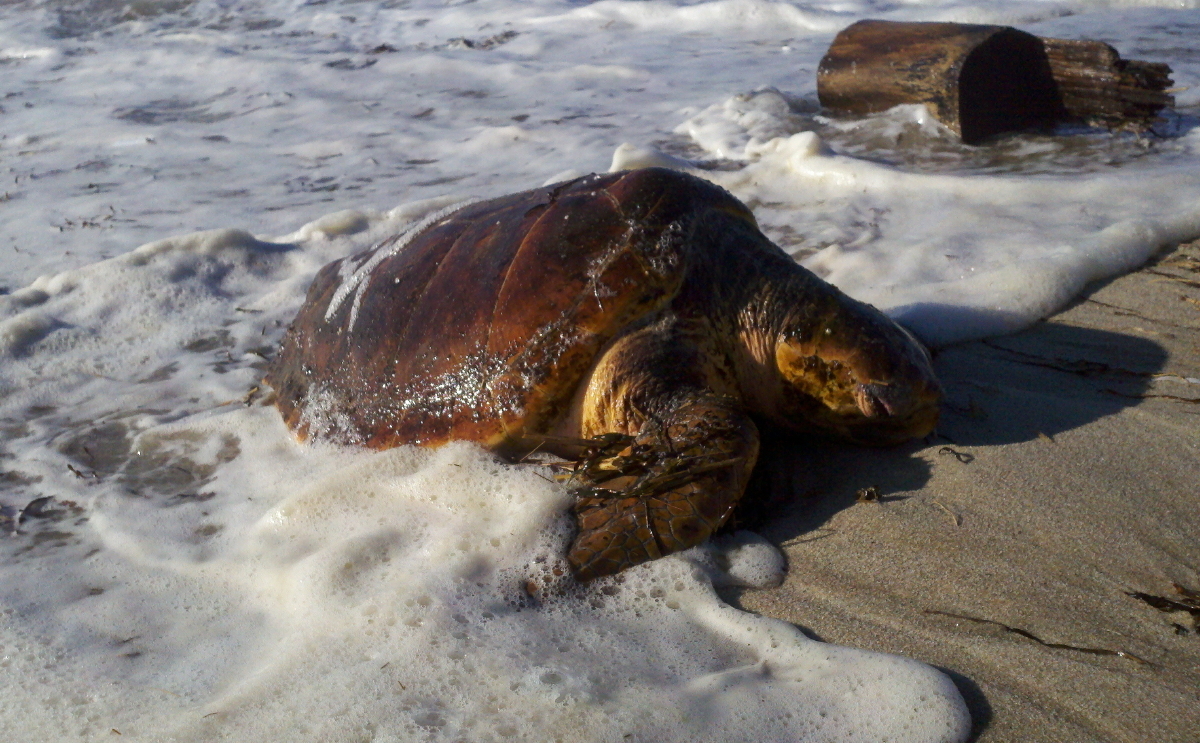
Cold-Stunned 70-Pound Juvenile Loggerhead Sea Turtle Strands on Truro Beach
Summer ends and fall brings dramatic change to the Massachusetts shore. Not just leaf color, but the entire fabric of coastal life transforms from easy summer to rugged winter. Fluffy clouds, cerulean skies and lazy sands are blown away by autumn storms that howl across Cape Cod Bay. Summer ripples swell into monster breakers that reshape beaches and spread ocean wrack along the shoreline. Scattered among piles of seaweed lie sea turtles tossed ashore like flotsam and jetsam to flail helplessly in lethal conditions. Yet, thanks to selfless “crowdsaving†by an army of volunteers who patrol Cape Cod beaches during the worst and most dangerous weather, thousands of sea turtles have been rescued from near death, rehabilitated back to health and returned to the ocean to restore severely endangered populations.

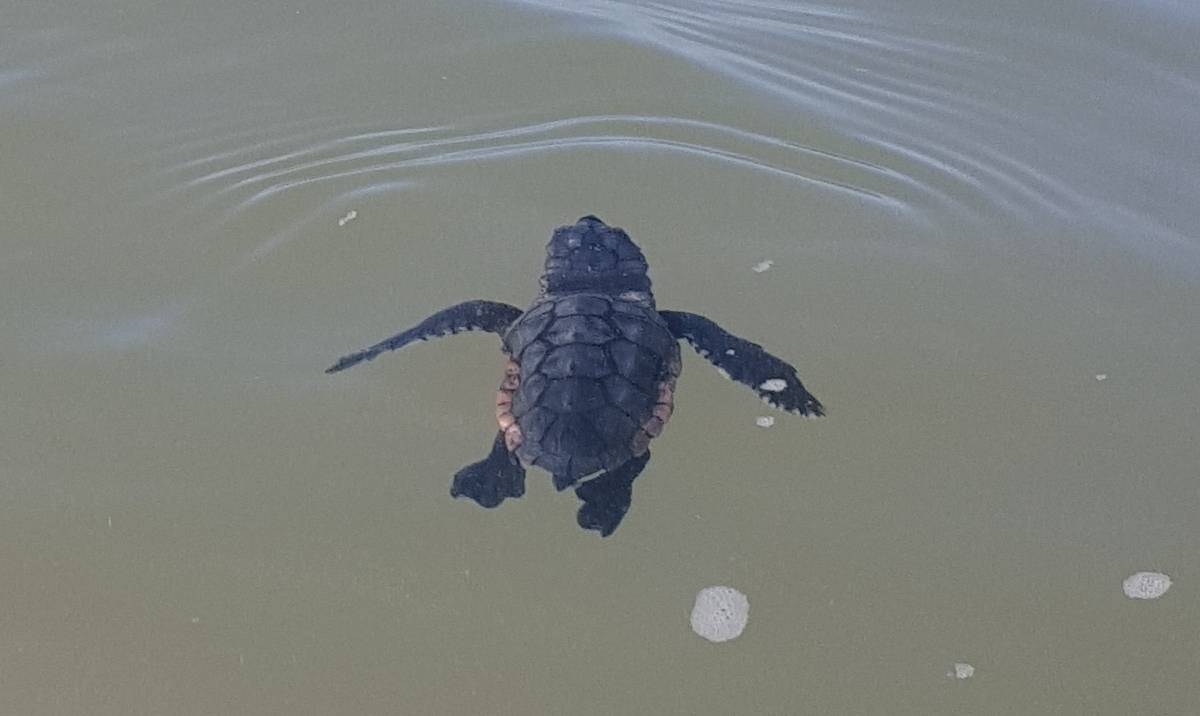
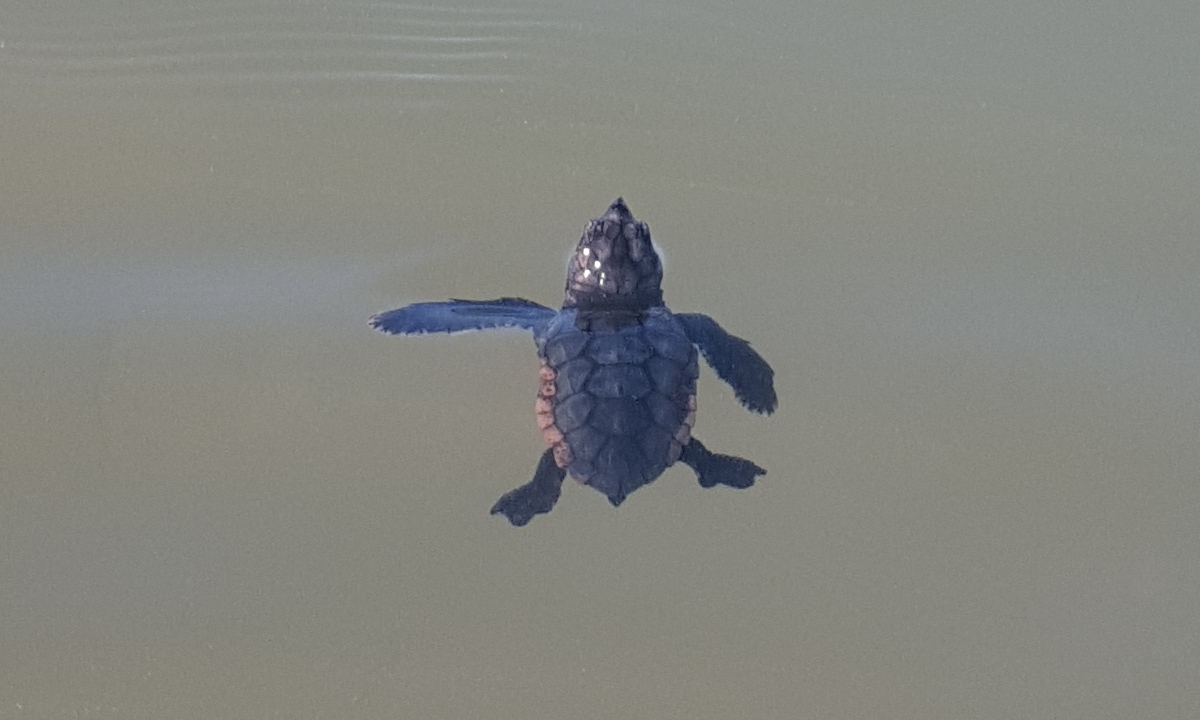
Tiny Loggerhead Hatchling Begins Its Perilous Oceanic Journey That May Detour into Cape Cod Bay
As shadows lengthen and days shorten, conditions recur each fall for sea turtle strandings on Cape Cod. Juvenile sea turtles meander for several years from the Gulf of Mexico, the Caribbean and the Southern Coast presumably to “sow their wild oats.” First, as hatchlings they float in islands of sargassum and drift northward with the Gulf Stream. Then, as juveniles they swim landward to transition from this pelagic sanctuary to a coastal lifestyle. As turtles reach the Gulf of Maine and fall arrives, dropping water temperatures cue them to migrate south.

Arm of Cape Cod Stretches Thirty Miles into the North Atlantic
The arm of Cape Cod stretches thirty miles into the North Atlantic like a giant seine net and “catches†waves of sea turtles as they migrate southward. Hotter summers yield higher ocean temperatures, and warmer water entices turtles to swim closer to the mainland. Southbound turtles that pass west of the Provincetown “fist” collect inside Cape Cod Bay. At first all is well as easy New England summer lingers into September.

Cold-Stunned Juvenile Kemp’s Ridley Sea Turtle Strands Helplessly on Wellfleet Beach
Soon, though, a wall of cold Atlantic water forms along Stellwagen Bank to seal turtles inside the bay with no escape route. November arrives and Cape Cod Bay chills, too. When water temperature nears 50° F, sea turtles become cold-stunned and immobilized. They are tossed around the bay by wind and sea like flotsam and jetsam. Their survival now depends on intense fall storms to drive them ashore and dedicated humans to rescue them. The earlier in the season that powerful storms strike, the sooner sea turtles strand on beaches; and the earlier turtles get tossed ashore, the better their odds of survival.
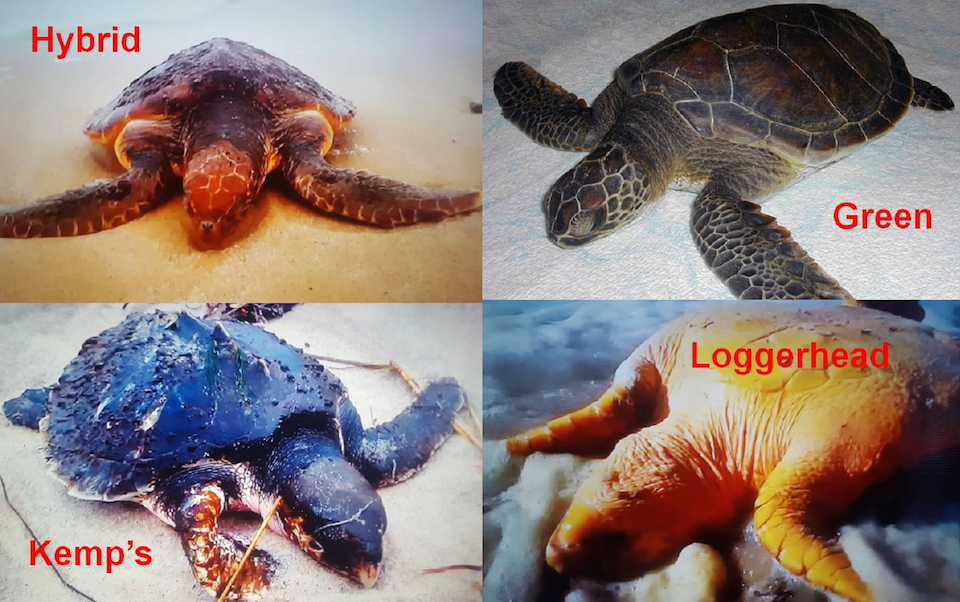
Species of Cold-Stunned Sea Turtles on Cape Cod
The vast majority, 90% or more, of stranded sea turtles on Cape Cod are juvenile Kemp’s ridleys that mostly range in age from two-to-three years old. They are about the size of large dinner plates and hit the scales at around 4 to 8 pounds. Kemp’s ridleys remain one of the most endangered sea turtles in the world.
Juvenile loggerheads make up the next most frequent stranded turtle species. Even though still youngsters, they are massive animals that can range in weight from 25 to 100 pounds. Green sea turtles are the third most common species and can vary in size from only a few pounds to as large as small loggerheads. Occasionally, a hybrid sea turtle strands and even more rarely a hawksbill comes ashore. Whatever the species, nearly every cold-stunned sea turtle is a juvenile on a once-in-a-lifetime passage through Cape Cod Bay.

Sue Wieber Nourse Rescues Five Juvenile Kemp’s Ridley Sea Turtles at Bound Brook Beach
In 2014 a record-breaking 1250 cold-stunned sea turtles washed up on Cape Cod Bay beaches, four times the previous record season. They were rescued by an army of volunteers organized by Mass Audubon’s Wellfleet Bay Wildlife Sanctuary to patrol scores of miles of storm-blasted coastline each high tide, night and day, through November and December. Mountains of banana boxes were donated to house and to transport turtles. Tons of clean towels appeared from nowhere to line boxes and comfort distressed animals. Convoys of volunteer vehicles rushed rescued turtles 100 miles from the Wellfleet Bay sanctuary to intensive medical care at the New England Aquarium facility in Quincy. Expert staff and trained volunteers worked around the clock to save each precious patient. Once medically stabilized, turtles were dispersed to dozens of aquariums and marine centers throughout the East Coast for release or for additional rehabilitation that would last from a few weeks to several months.
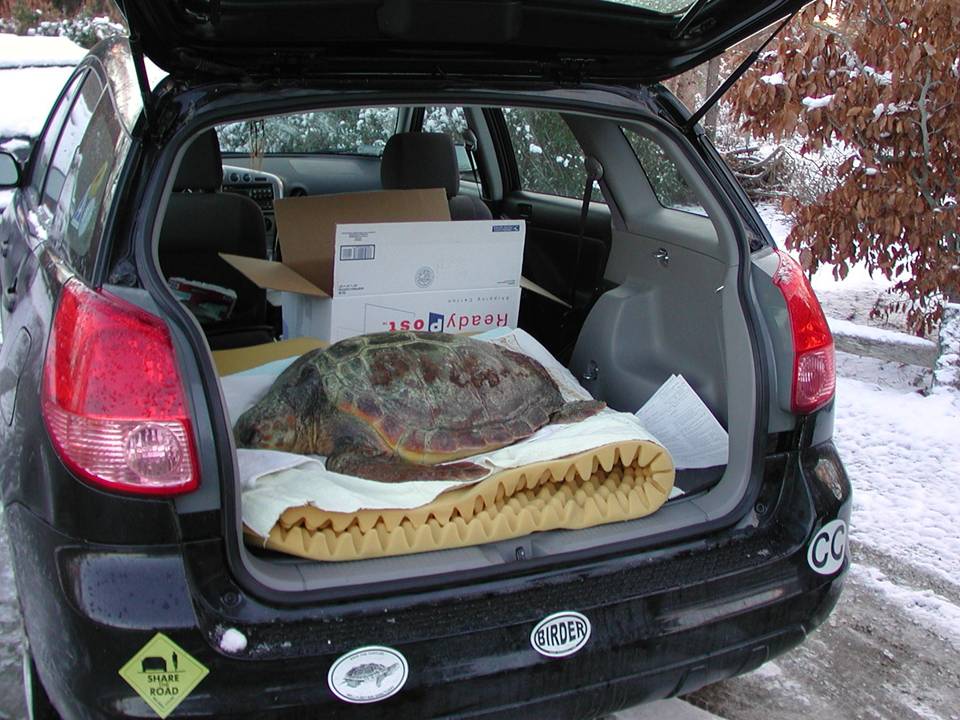
Volunteer Drive Rushes Loggerhead and Boxed Kemp’s Ridleys to New England Aquarium
Responding to an unprecedented crisis and an overwhelming need beyond the in-house resources of local conservation groups, hundreds of individuals and scores of organizations banded together into an extemporaneous, yet powerful community dedicated to “crowdsaving†the world’s most endangered sea turtles. Together they rescued hundreds of Kemp’s ridley, loggerhead and green sea turtles from the brink of death and returned them to the wild to help restore endangered and threatened populations.

Don Lewis Releases Juvenile Kemp’s Ridley Sea Turtle in Osterville
When these turtles wash ashore on Cape Cod, they have already cleared survival obstacles that claim 999 out of 1000 sea turtle hatchlings. Except for the geologic accident of Cape Cod’s hook, created by the retreating Laurentide glacier thousands of years ago, they would safely migrate back to southern waters to mature and to breed. Now, with but a brief interruption for “crowdsaving,” they will reach their natal waters to do what comes naturally.

More Than 150 Cold-Stunned Sea Turtles Strand on November 21st, 2014
As sure as late October leaves frost on Halloween pumpkins, the sea turtle stranding season will soon explode in Cape Cod Bay. Already a handful of Kemp’s ridley sea turtles have appeared early on Cape beaches in what appears to be pre-cold-stunned condition. With the first sustained storm in November, the stranding season will kick off in earnest.

Massive Juvenile Loggerhead Sea Turtle Awaits Rescue Between Tides
Mass Audubon will deploy patrols to search for stranded turtles around each high tide. Still, in these life and death situations, there can never be too many eyes on a beach. During stranding peaks, turtles can be found throughout the 12-hour tidal cycle, stuck in oozy flats, drifting helplessly along the shore or simply beached. A turtle stranded on an ebbing tide might wait six to nine hours for the next scheduled patrol and may not survive. When a cold-stunned sea turtle strands on a beach, hypothermia sets in as freezing winds drain the body of heat; death comes quickly if turtles are not recovered soon after they become exposed to frigid air. Off-peak beach walks can and do safe lives.

Turtles Strand on Bayside Beaches Opposite Prevailing Wind Direction
Selecting the best beach depends largely on wind direction over the previous 24 hours and, of course, luck. Turtles strand on bayside beaches. Place an imaginary stickpin in the center of Cape Cod Bay and draw a broad invisible arrow from the pin toward the shore in the direction the wind is blowing. A west wind tosses turtles on beaches from Orleans to Truro. A north wind drives turtles toward Barnstable and Dennis. Prevailing northwesterly storms push sea turtles onto beaches from Brewster to Eastham.

Sue Wieber Nourse and Jared Nourse Rescue Juvenile Kemp’s Ridley from Chapin Beach after Midnight
Nighttime beaches can be extremely dangerous for the inexperienced. What seemed like a safe family beach in daylight transforms into a potentially lethal scene at night. Storm surf deafens; high tide swallows beaches; breakers pound cliffs and seawalls. Nothing looks, feels or sounds familiar. Finding landmarks is nearly impossible. Nighttime patrols should be left to the professionals.
While 2014 has surely braced folks for the new stranding season, no amount of preparation can suffice once the overwhelming day after day, night after night rescue season kicks in. Staff and volunteers fatigue, supplies dwindle, rescued numbers mount, facilities overcrowd, and turtles still pile up on beaches with every tide.
HOW CAN I HELP ‘CROWDSAVE’ ENDANGERED SEA TURTLES
(1)   Support Mass Audubon’s Wellfleet Bay Wildlife Sanctuary and the New England Aquarium who play essential roles in rescuing and saving these exquisite animals
(2)Â Â Â Offer to volunteer for beach patrols and as turtle drivers
(3)Â Â Â Donate towels and thick foam pads for turtles to rest upon
(4)Â Â Â If you discover a stranded sea turtle on the beach,
- Do NOT put it back in the water
- Do NOT remove it from the beach
- Move it ABOVE the high tide line
- Cover it with dry seaweed to prevent hypothermia
- Mark it with distinctive beach debris
- Call MAS WBWS at 508-349-2615 ext. 104 to retrieve the turtle
- Give clear directions from the nearest landing or beach access
(5) Â Sea turtles are federally protected and require a permit to transport

Three-Year-Old Teague Whalley Rescues World’s Most Endangered Sea Turtle from Bourne Beach
Sea turtles are exquisite creatures, and the opportunity to save them makes for unbelievably blissful moments. Cape Cod geology and weather combine to create special circumstances every fall that trap hundreds of tropical and semi-tropical turtles inside the bay. Crowdsaving has effectively rescued thousands of these precious animals from certain death. Working together, every day people from three to ninety-three transform themselves into superheroes who secure the future of the world’s most endangered sea turtles. Be a hero, rescue a turtle, and save the world.