Lieutenant Island Bridge Damaged in Storm — 18 December 2000

December 18th, 2000

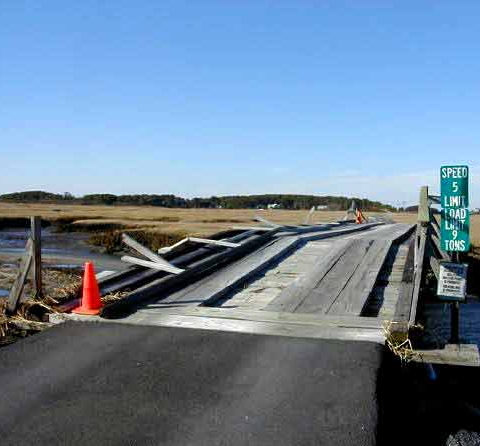
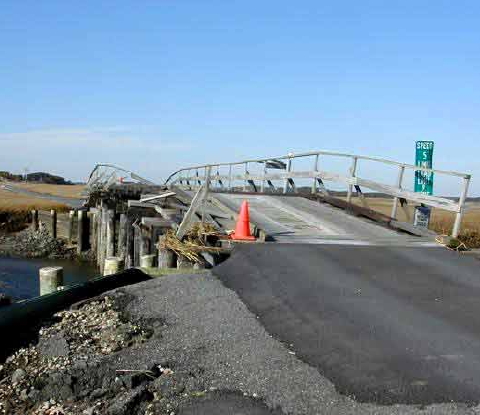
Driving rain and gusts exceeding 50 knots slammed against the Outer Cape last night.  Augmenting an already significant tidal flow, the storm thrust tons of wrack and debris through the marsh channels and against the one-lane tinkertoy bridge spanning the Lieutenant Island causeway.

12-18-1a 480

Storm-Damaged Lieutenant Island Bridge

The windward railing collapsed under the strain.

12-18-2a 480

Storm-Damaged Lieutenant Island Bridge

Along the shoreline along Turtle Point and Turtle Pass, the storm wrack piled 10 to 20 feet deep and several feet high.  The surge reached far above the high tide line, raking nesting dunes and potentially drowning any lingering, over-wintered hatchlings.  The extent of this tide matched the late January storm flood of last winter.

Harp Seal May Have Left Fox Island Marsh — 18 December 2000

December 18th, 2000

12-18-1

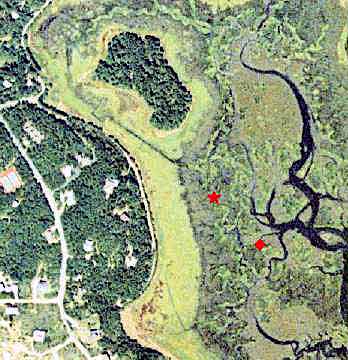
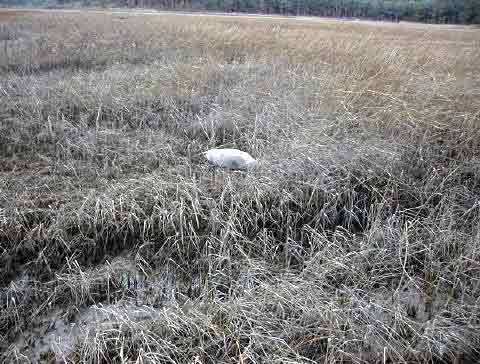
At low tide this morning, I executed a patterned search of the marsh south of Fox Island, focusing on the areas where the young harp seal was first detected on Saturday (star) and again Sunday (diamond).  There was no sign of her, but this marsh area is quite extensive with acres upon acres of thick grass laced with serpentine channels and quick-mud sink holes.  No ground search, no matter how exhaustive, could conclusively confirm her presence or absence.  I’ll continue to check this area during my regular terrapin habitat patrols.

12-18-2 480

The Cape and Wellfleet were blasted by a storm front last night with winds howling from the south with over 50 knot gusts.  It struck with enough force to down power lines and damage the Lieutenant Island bridge.  Today the breeze has swung to the west at a more moderate 25 to 30 mph.  One wonders whether this gentle critter might have sensed the impending storm and took refuge deep in a protective marsh system almost akin to a hurricane hole.  Just wondering.

Harp Seal Watch — 17 December 2000

December 17th, 2000

12-17-1

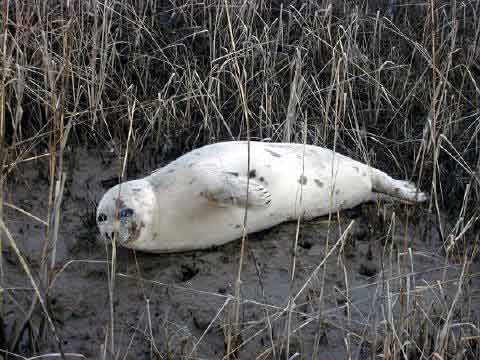
Juvenile Harp Seal in Fox Island WMA Marsh

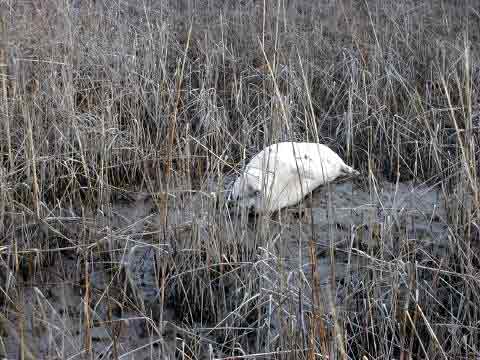
With yesterday evening’s high tide, I returned to the harp seal stranded in the Fox Island marsh.  The tide had reached the mud bank were the seal was spotted Saturday morning.  I waded out to her locale to see if she had escaped with the tide and couldn’t see her until I was within about ten feet.  She hadn’t moved, but remained in the same area, floating head down and under water with only the bump of her back exposed.  I was concerned that she might be immobilized by something or other, so I began to approach cautiously.

Well, life is a challenge.  At maximum high tide she was floating in about 20 inches of water.  I know that because the low wading boots I had foolishly chosen for this trek were 18 inches high.  Yep, that’s right — two inches below water level.  When I slogged to a spot right over her, she snapped to life, poked her head up, and began to plow through the flooded high marsh grass toward deeper water.  I walked with her until the icy tide reached my thighs, at which point I decided the better part of valor was to retreat while I could still feel my toes.  She didn’t make it all the way to the navigable creek, but she did maneuver to within a few feet of a nice channel. At the request of the Mammal Stranding Network, I returned Sunday morning to check the area at low tide to see if she had moved out.  Unfortunately, this young harp seal remains grounded in the same location as last night.
12-17-2 423

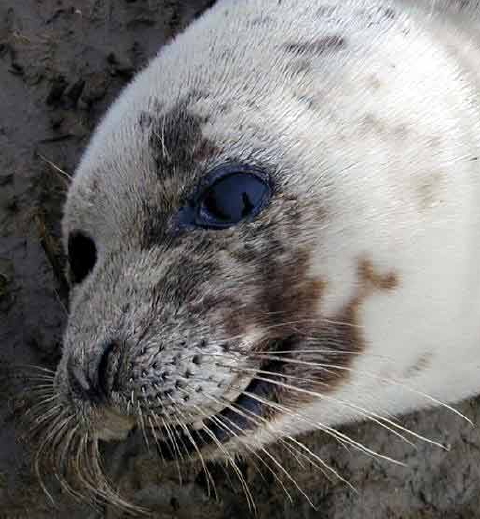
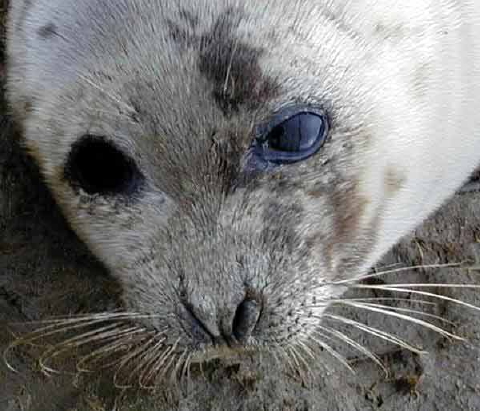
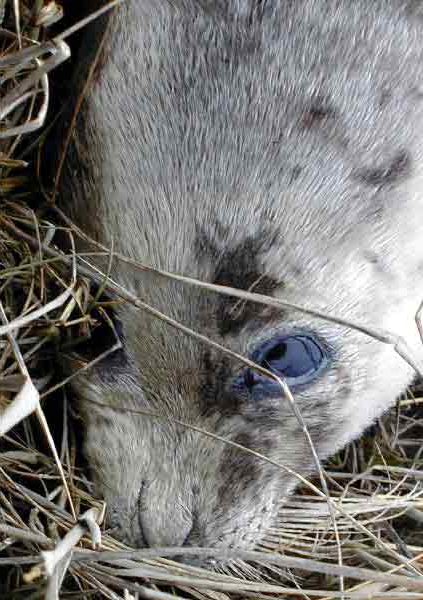
With head resting in a clump of high grass, she took little notice my approach, just following my movement with her eyes but not lifting her head.  Her right eye, which I thought might have been injured, seemed responsive today, although darker and seemingly larger than the left eye.
12-17-3 480

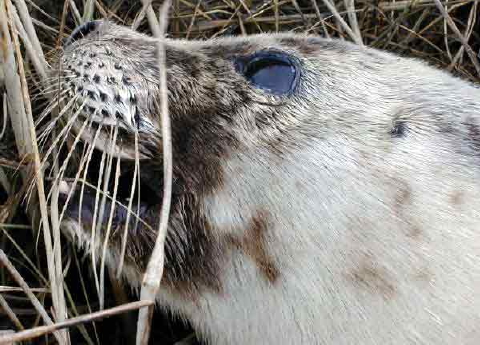
As I got closer, she panted in shallow breaths, something akin to weak, barely audible barks.

12-17-4

She did lift her head slightly as I circled behind her and walked away.  The spot where she lies now is within a foot or two of a creek channel which floods regularly with normal high tides.  So, if she desires, there should be no trouble escaping from this section of the marsh when she’s ready to leave.  I’ll check on her again tomorrow morning.
Young Seal Discovered off Fox Island — 16 December 2000

December 16th, 2000

12-16-1

Young Harp Seal in Fox Island WMA Marsh

About a 1/4 mile south of Fox Island in the marsh off Anawan Road on Indian Neck, I found a young seal high and dry on a mud bank quite a distance from any open swimming channel back to the bay.  She may have floated in with the astronomically significant tides these last few days.

12-16-2 480

She appeared responsive and tracked my movements with her left eye.

12-16-3 480

But the right eye socket seemed enlarged and the eyeball was black as ebony.  It did not appear normal.

12-16-4

She did look plump and well nourished — at least to a turtleman’s eye.  I’ll re-check her at high tide today and again tomorrow morning.

Barnacle Bill — 7 December 2000

December 7th, 2000

12-07-1 480

Bob Prescott Retrieves Loggerhead Sea Turtle from Frigid Surf

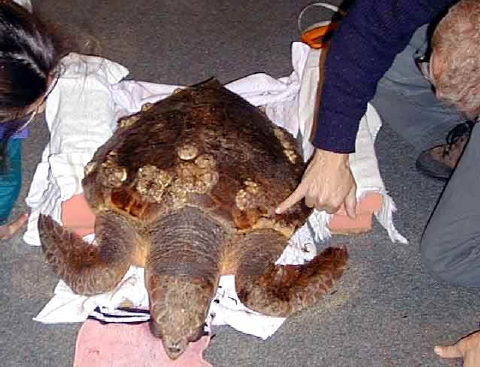
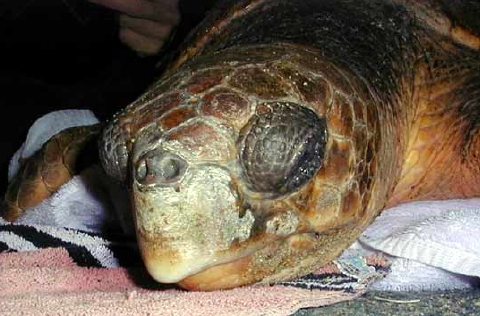
Night patrol hit the beaches of Eastham, Wellfleet and Truro about 8 p.m., a little after high tide.  Temperature hovered around 30 with a snappy west-northwest breeze.  Bob Prescott, the Wellfleet Bay Sanctuary director, spotted “a rock where there shouldn’t have been one” off the Eastham beach near Cole Road.  He plunged into the frigid surf and retrieved Barnacle Bill, a nearly 68-pound loggerhead being tossed ashore in the rising tide.

12-07-2

Barnacle Removed from Loggerhead Sea Turtle

As the name implies, his carapace was encrusted from head to tail with barnacles, some of which wrapped around and under his top shell.  Whole communities of critters had taken residence on this nearly two-foot square mobile reef.  With a sharp knife, barnacles were removed.

12-07-3

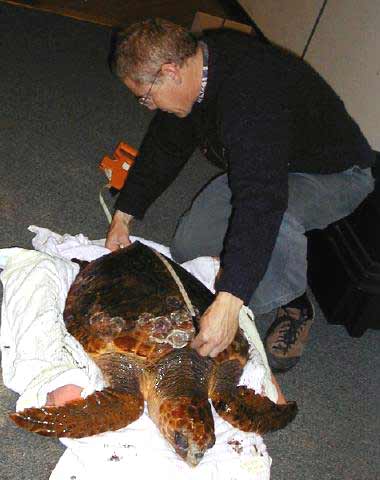
Bob Prescotts Measures Loggerhead Sea Turtle

His carapace was cleaned and sterilized, and his flippers were jellied to prevent dehydration, giving Bill that moist and glossy look so sought after in loggerhead pinups.

12-07-4 480

Loggerhead Active Despite 33.7º F Internal Body Temp

Despite an internal body temperature of only 33.7°F, Bill seems remarkably active and responsive.  He’s resting the night in a dark 50-degree recovery room, waiting for tomorrow’s trip to the New England Aquarium and the beginning of his voyage back home to the tropics.