Maryland High Schoolers Rescue Distressed Hatchling — 21 May 2001

March 21st, 2001

05-21-1 480

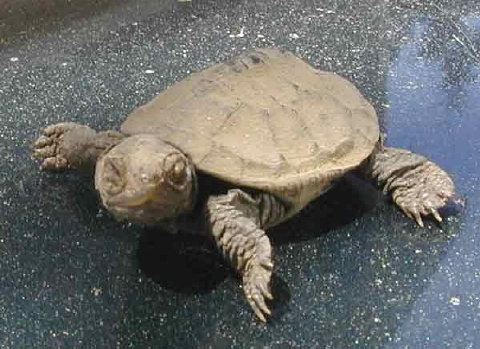
Terrapin Hatchling Rescued by Maryland High Schoolers

Students from Wooten High School in Maryland visited Mass Audubon’s Wellfleet Bay Wildlife Sanctuary this morning on a field trip. Being more than 500 miles from the Free State didn’t stop these kids from rescuing Maryland’s signature critter: a diamondback terrapin.  Walking the picturesque Goose Pond Trail along the South Wellfleet marsh, they spotted a dust enshrouded hatchling blindly crawling along the path.  She measured a mere 2.8 centimeters long and weighed in at a severely dehydrated 4 grams.  Her eyes were sealed shut by desiccation and Terry, as the students named her, was in serious distress and easy prey to a host of predators if the elements themselves didn’t snatch her first.  Without their intervention, Terry didn’t stand a chance. 

05-21-2 480

Terrapin Hatchling Hydrated and Ready for Release

Back in the lab, Terry has been integrated into the recovery terrarium with Knotch.  She soaked in fresh water under a heat lamp and was able to open her eyes to inspect her new environment.  After less than two hours, she left the wading pool and has begun exploring the rest of the tank.
The Marsh Surrenders Its Secrets —19 March 2001

March 19th, 2001

In the Land of Ooze, nothing happens fast.  Fall lingers into November, winter tarries into March, and spring never comes on time.  But as water temperatures inch upward at turtle speeds and the mud flats begin to thaw, the marsh reluctantly surrenders its secrets, held buried since last October.  Remains of two terrapins were uncovered in the Fox Island Wildlife Management Area this morning.

03-19-1 480

Mature Male Terrapin Carcass in Fox Island WMA

The first turtle was a mature male, 6 or 7 years old.  He had not been previously observed by our research team, so there’s no history on this fellow.  His sported flared rear marginals and had an unusual slant cut across the front of his carapace which had shaved most of his right front marginal clean off.

03-19-2 480

Don Lewis Documents Mature Male Terrapin Carcass

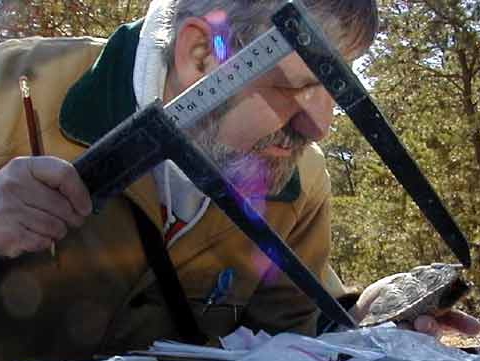
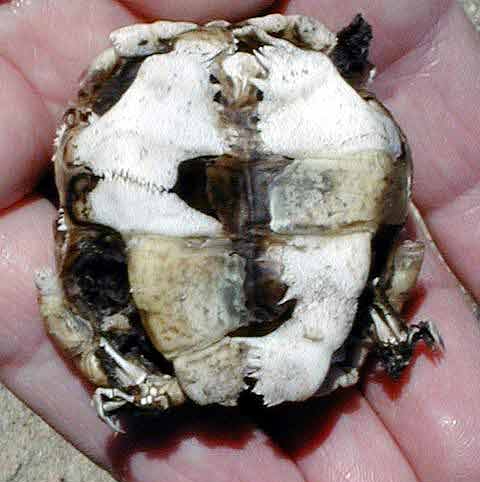
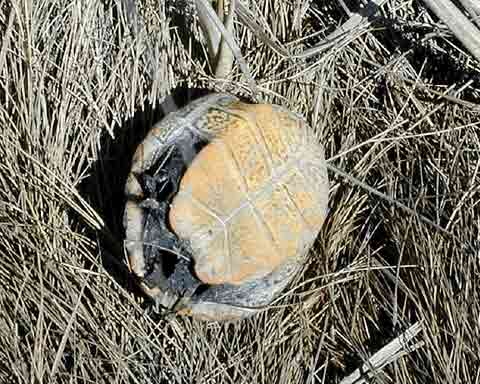
The second terrapin was a 2-year-old juvenile, completely desiccated but limbs mostly intact.  The shell had become bloated and separated along the seams, making accurate measurements impossible.

03-19-3 480

Desiccated Two-Year-Old Terrapin Carcass

Today’s water temperature readings in the marsh creeks, where our brumating terrapins are fast asleep, tickled the high forties, inching ever so slowly toward the magic 55ºF wake-up call.  And so we wait our here at the end of the universe. impatiently, for either Godot or the first terrapin of spring . . . whichever comes first.

Chubby Still Hanging On — 15 March 2001

March 15th, 2001

03-15-1

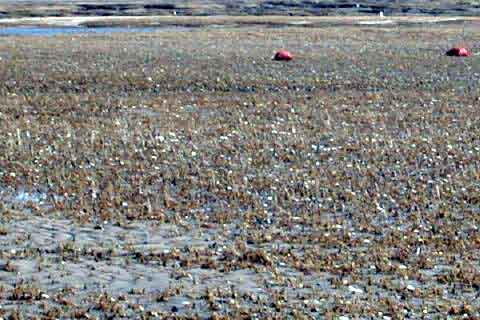
Taking water temperatures off Turtle Point this morning, I also checked on Chubby.  At first I thought she had left, since I couldn’t spot her from the bearberry hill overlook, and I so noted in my log.  But in the distant tidal flats I saw two large red objects which seemed suspicious.  I decided to investigate.

03-15-2

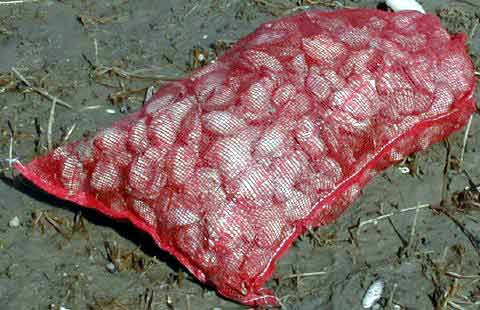
After a plodding, slogging, serpentine trek through the mud flats, I discovered these objects were bags filled with oysters collected from Fresh Brook.

03-15-3

But on the way back to the shoreline, I nearly tripped over Chubby as she lay still and hidden in a marsh hollow.

03-15-4 480

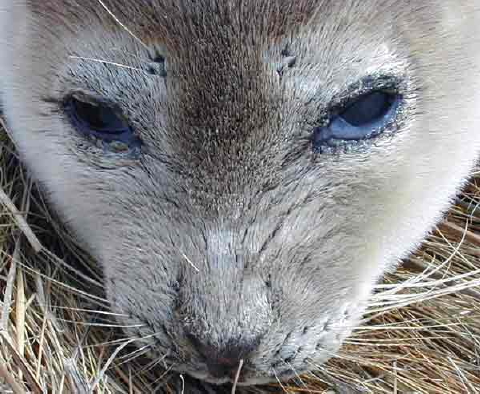
She was alert enough to react to my presence, but she continued wheezing and her breaths were labored.  I also saw slight traces of dried blood on the rim of her nostrils.

Chubby Fading? — 14 March 2001

March 14th, 2001

03-14-1

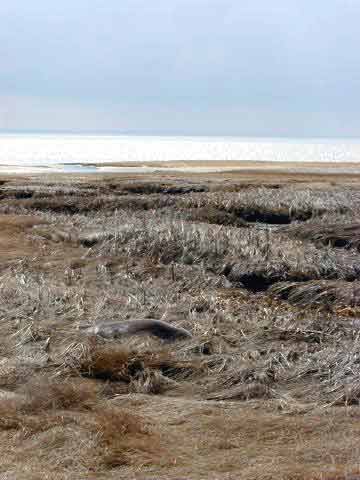
“Chubby” in the Salt Marsh

Rounding Turtle Point off south Lieutenant Island this morning, I spotted a grayish shape sagging with the contour of the salt marsh tufts.  A quick scan with binoculars identified Chubby.  She lay about 50 feet to the east of her last location and in an area which is flooded at each high tide.

03-14-2

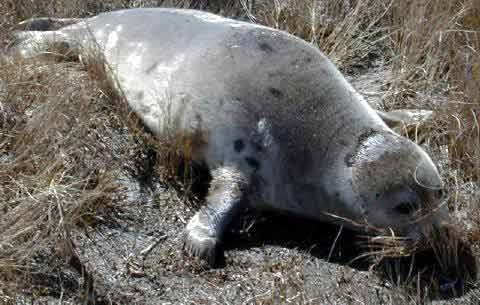
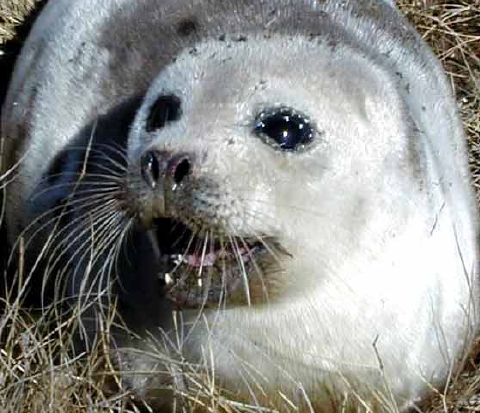
“Chubby” — Ailing Juvenile Harp Seal

She appeared so lethargic as I approached that I suspected she had passed.  But, no, as I tight-roped through the mucky marsh flats and circled for a closer view, she still tracked my movement with her eyes if not with her head.

03-14-3

Evidence of Confrontation

The area of her left side, which evidenced a confrontation on Monday, still seemed raw with some spotty blood traces.  She continues to expel gas in audible bursts.

03-14-4 480

Juvenile Harp Seal

During this quick assessment, she lifted her head only once and briefly; she did not exhibit any defensive behavior.  Her eyes have some crusting around the lower edges, but I saw no fresh exudate.

Chubby — 12 March 2001

March 12th, 2001

03-12-1

“Chubby” — the Ailing Juvenile Harp Seal

The juvenile harp seal, first spotted on Saturday, remains beached along the wrack line of south Lieutenant Island.  While she shifted nearly 500 feet, probably with the tidal flow, to the west from Saturday to Sunday, she now rests within a foot or two of yesterday’s location.

03-12-2

Don Lewis Examines Ailing Juvenile Harp Seal

On closer examination, she has begun to exhibit labored breathing which I did not detect during earlier observations.  This afternoon’s 11.7-foot-high tide may afford her another opportunity to head out to sea, but after tomorrow morning’s high, tides will begin to drop sharply leaving her a goodly waddling distance to reach freedom.